Superman Stuff #14: Super-Reviews from March 25-April 8!

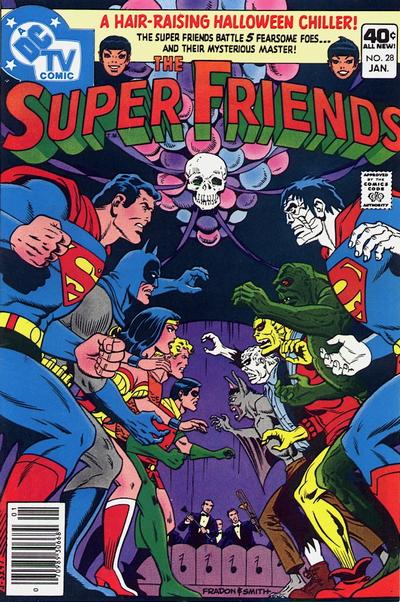
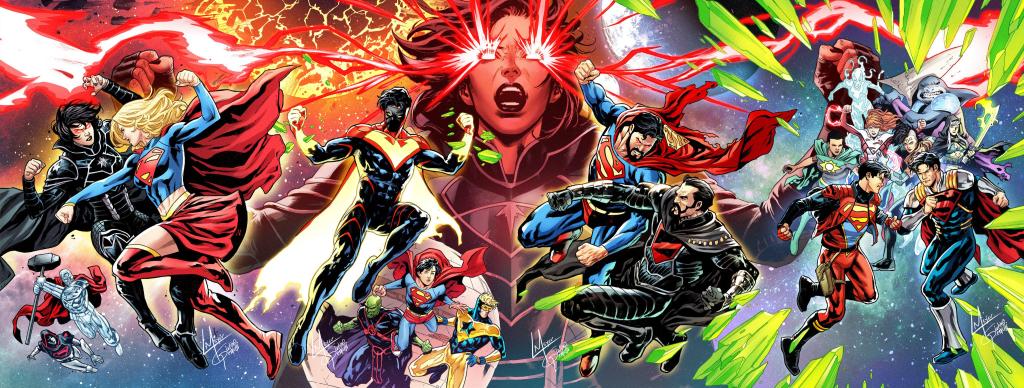
The final Reign of the Superboys story kicks off, and much more. Let’s see what’s been going on in the Superman comics over the last few weeks.

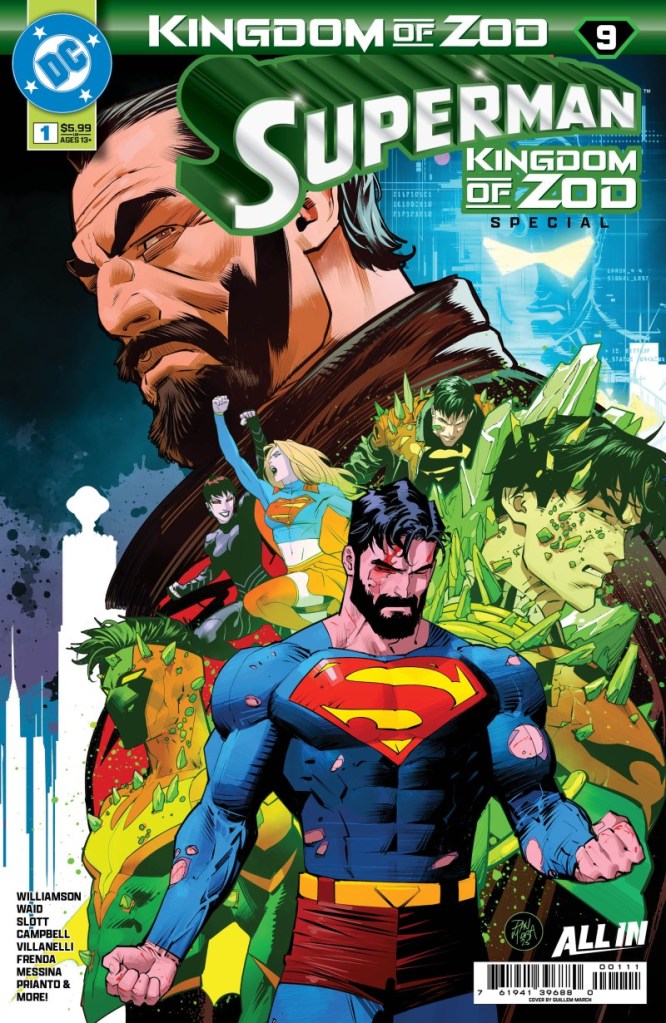
Superman #36
Title: Prime Time Part One (A Reign of the Superboys tie-in)
Writer: Joshua Williamson
Art: Dan Mora
Main Cover: Dan Mora

I am not surprised that this was my favorite of the four Reign of the Superboys launch issues. Not that the other there weren’t good, but this is the one that feels the most immediate and important to the larger story of the DC Universe, and I’m just so dang excited about what they’re doing overall right now that it gives this issue some extra cred in my book.

Superman, of course, has been missing since the end of DC KO, but that doesn’t mean that Earth is defenseless. Superboy-Prime, his and Lois’s unlikely partner over the last several issues, is planning to stick around with the intention of proving to the heroes of the DC Universe that he’s reformed. Of course, it isn’t quite as simple as all that. 

Joshua Williamson is doing some really clever stuff with the character here. It would be so easy to sweep his past under the rug and just reset him as an anti-hero. It’s been done in the past with characters like Harley Quinn, whose history of (y’know) murdering people with the Joker is rarely, if ever, referenced anymore. Williamson, however, is not only acknowledging the things that Prime did in stories like Infinite Crisis, but using that as fuel for his story. The heroes of the Justice League remember the things he did, and what’s more, they’re aware of the fact that he’s from a universe in which they’re all fictional characters, and he’s READ their comic books, and THEREFORE KNOWS ALL THEIR SECRETS. And understandably, they’re uncomfortable having him around.

 The solution seems to be to have Lois take him under her wing, and the dynamic they’re structuring between these two characters is really fascinating. One might expect Williamson to have her take on a motherly role, but Prime is probably about college age here, and is intent on proving himself to be a responsible adult. (The way he does it, by the way, is perfectly in keeping both with his character and with the role he’s in, of someone in his early 20s who isn’t nearly as grown up as he thinks he is.) Lois, then, is moved into a role that feels more like a big sister. She’s looking out for him, she’s taking care of him to the best of her ability, but she recognizes the fact that he’s old enough to make his own choices and all she can really do is give him advice. 

Since he brought Prime back into this book, Williamson has been leaning on Prime’s fourth wall-breaking abilities. I like the direction we’re going in here as well. Rather than just having him directly address the reader like Deadpool or She-Hulk (back in the glorious John Byrne run), he seems to be taking the approach that Prime is simply AWARE of the fact that he’s in a comic book, and he uses that knowledge of the medium and history of the DC Universe as a guidepost. It’s not like he can look into a camera as if he were on The Office, after all, although there are a couple of panels where it feels like he’s getting close. 

Like every other Reign of the Superboys issue, this one ends with a last-page reveal of a character who presumably will be instrumental to the story. Unlike the other three, though, this one was actually KEPT A SECRET! Is that even POSSIBLE? The character in question didn’t appear on the cover – not even a variant – and to the best of my knowledge their presence wasn’t even leaked to the comic book media ahead of time. I didn’t think we lived in a universe where such a thing was possible anymore, but there ya go. The last page not only surprised me, but satisfied me. I’m excited to see where it goes next.

It’s gotten hard to talk about Dan Mora’s artwork, because I feel like I just kind of repeat myself every time. But in my defense, there are only so many ways to say, “Damn, this guy is REALLY good.” The book looks fantastic, and I love the way that Prime looks very much like a younger version of our Clark Kent, something he even points out to Lois as a bit of an obstacle when it comes to establishing his own secret identity. 

Now that all four of the Reign storylines have begun, I feel very good about this direction. Each of the four titles has a very clear identity and is telling a different story. And if they remain separate stories, each staying in their own lane and unified only by the fact that the star is someone who uses (or once used) the Superboy moniker, there’s nothing wrong with that. It’ll be a nice little change of pace.

At least until Big Blue himself comes back. 
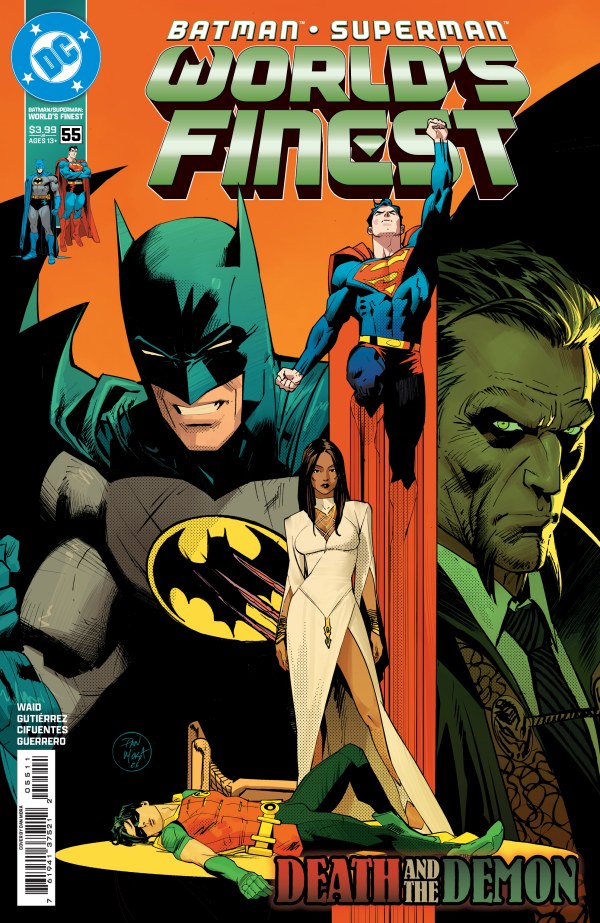
Batman/Superman: World’s Finest #50
Titles: Dream Team (Story #1), Sturm Und Drang (Story #2)
Writer: Mark Waid
Art: Dan Mora (Story #1), Adrian Gutierrez (Story #2)
Main Cover: Dan Mora

Isn’t it odd how rare it is for a comic book to make it to issue #50 these days? Seems like the Big Two are out to reboot every series any time there’s a new writer. Of course, this book has ALSO held on to Mark Waid for 50 issues, which is ALSO a feat in this day and age. And look – his original partner Dan Mora is back for the main story in this issue, after spending time with the Justice League, Superman’s solo title, and an unexpected trip to Cybertron. Ah, it’s a grand time to be a fan of World’s Finest.

In “Dream Team,” Dr. Destiny has placed the entire world into a dreamstate – everyone except for Superman, Batman, and Zatanna, who were off-Earth at the time. Zatanna sends the World’s Finest team into Destiny’s Dreamstone to track him down.

As a one-off story, it’s pretty solid. The thrust of the issue is Superman and Batman bouncing around in one another’s subconscious, getting glimpses of the sort of things that they dream about. Batman, for instance, learns that Superman is a little envious of his car, whereas Clark gently chastises Bruce for his infatuation with a certain feline femme fatale. Ultimately, the story is just sort of an excuse for the two characters to examine one another, who they are, and the nature of their friendship. After such a long time where the characters were NOT friends (thanks, Frank Miller), followed by a long period where they vacillated between being uneasy allies and people who trust one another but don’t necessarily LIKE each other, the way this title has made their friendship a vital part of their respective characters again is a beautiful thing. 

Adrian Gutierrez is back for this issue’s second story, “Sturm Und Drang.” A little boasting pits the World’s…second finest teams against one another, when Robin and Jimmy Olsen set out to prove that they’re more competent than Supergirl and Batgirl in a race to find a lost Egyptian artifact. 

As glorious as it was to have Mora back on the title, this is actually the better of the two stories. The dive into the subconscious is fine, and it’s executed very well, but there’s just so much joy to be had in the petty rivalry between the guys and girls in this issue. As Jimmy and Robin are curtailed by their own overconfidence, we watch the more “mature” girls conflict as they realize their differing opinions of Jimmy and Robin. But despite how silly the story can be, we do get to see these characters in action in a positive way. Jimmy, despite all his bravado, proves that he actually DOES have reporting skills, whereas Batgirl reminds us that Barbara Gordon is a librarian first, and librarians are the most powerful magic creatures in the world.

If you’re looking for a big, world-shattering anniversary issue, you may be a little disappointed. The two stories in this issue are both self-contained and neither of them seem to be laying out any sequel hooks. But they’re both a joy to read and do what they do exceptionally well.  

Bizarro: Year None #1
Title: The Planet
Writers: Eric Carrasco & Kevin Smith
Art: Nick Pitarra
Main Cover: Nick Pitarra

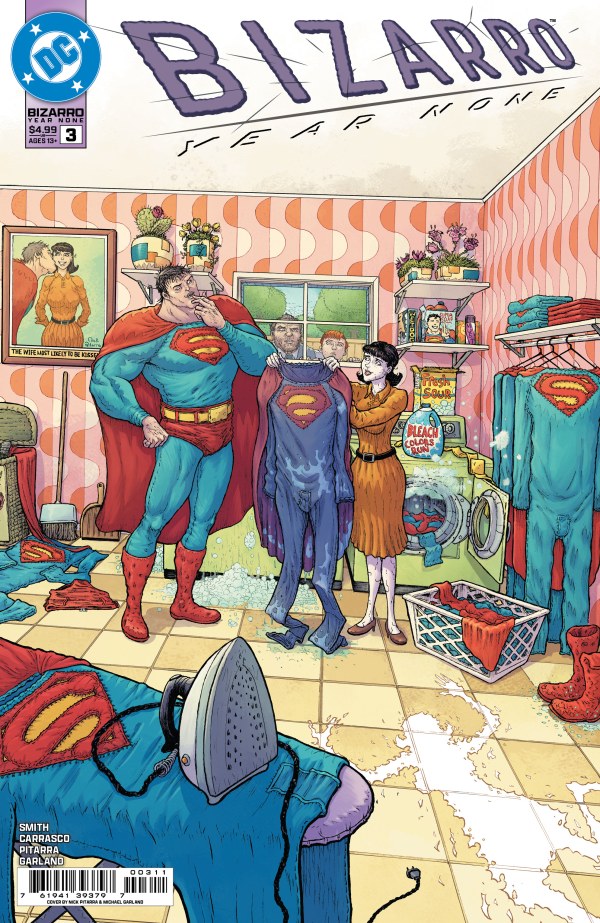
Kevin Smith’s return to the DC Universe begins here, with co-writer Eric Carrasco hopefully keeping him from falling too far behind schedule, with the most unique take on Bizarro I’ve ever seen. Set at a point in the past where Jimmy is the Daily Planet coffee boy, straining to get Perry White to take a chance on him as an actual journalist, the two of them get swept up in something beyond their comprehension. An experiment with a duplication ray has spawned a whole different universe, and the entity in charge of that world is bringing Jimmy and Perry in to help him get some things off the ground.

Smith and Carrasco have cherry-picked pieces of Bizarro lore such as the “duplicator ray” and the square Bizarroworld, but for the most part this could almost feel like an “Absolute” version of the character. It’s a total departure from the Bizarro that we’re used to, and although there are glimpses of classic Bizarro, it’s almost impossible to tell where this is going. I very much like the fact that Jimmy and Perry are the real protagonists of this story, each of them approaching the situation – and reporting in general, really – from the opposite ends of the spectrum. There’s something to be said in here about the state of journalism in the modern day, and Smith and Carrasco say it in an amusing way.

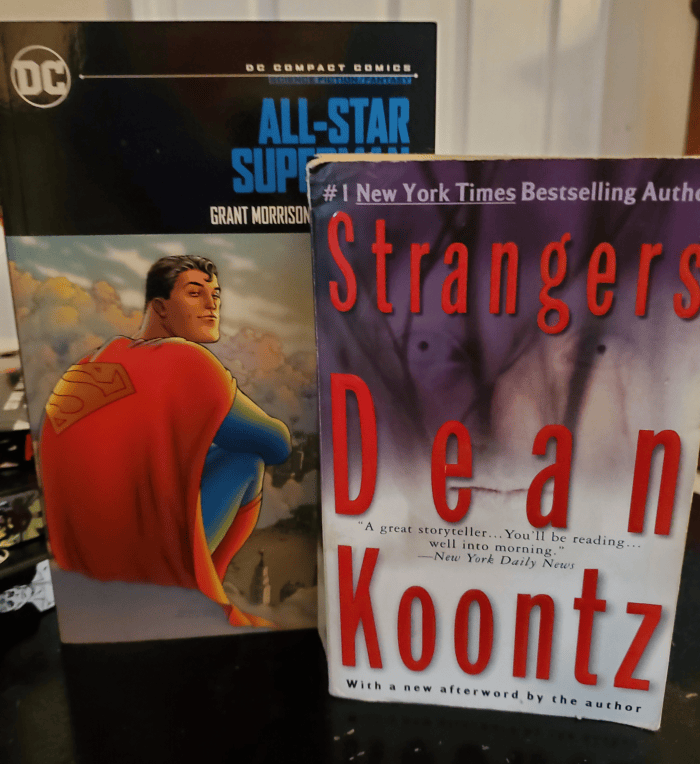
Nick Pitarra is an interesting choice. His lines and anatomy are somewhat evocative of Frank Quitely, which helps to give this whole story a feeling as if they’re trying to be a Bizarro counterpart to All Star Superman. If that is, in fact, the intention, it’s a pretty bold move. But I’m definitely along for the ride. 

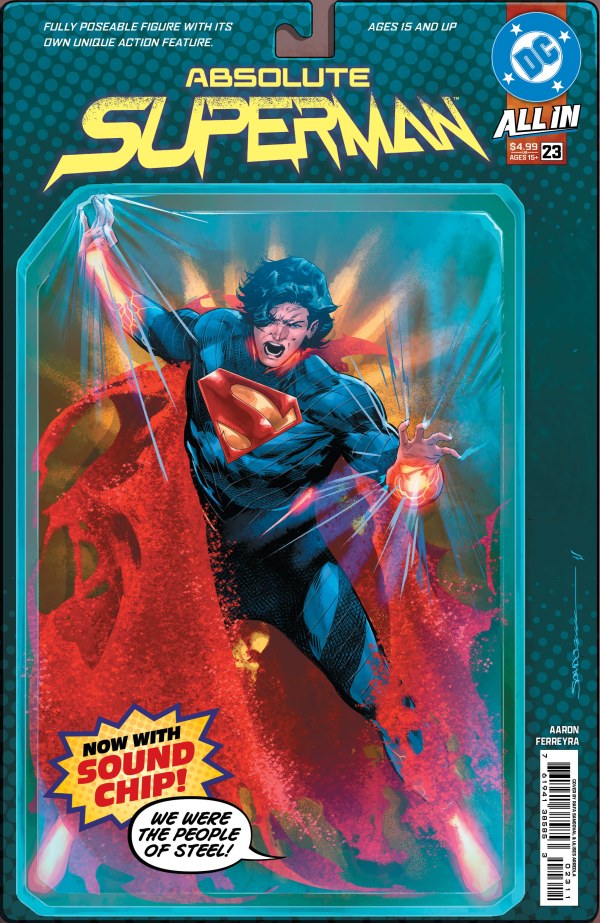
Absolute Superman #18
Title: Reign of the Superman Part One: King of the Black Land
Writers: Jason Aaron
Art: Rafa Sandoval
Main Cover: Rafa Sandoval

The Absolute Universe expands yet again, as this issue gives us the first seeds of not one, not two, but THREE new versions of DCU characters, not the least of which is the guy whose emblem is teased on the cover.

No, not that one. The other one.

This new story arc begins with a flashback to ancient Egypt, when a young boy seeks a way to deliver his people from slavery. A visit from a mysterious stranger promises a change at hand, but it’s the strange visitor he encounters in the desert who leads to his transformation. 

After the epilogue, in the present day Lois Lane (who is unable to stay out of trouble in any universe) has a lead on the whereabouts of Ra’s Al Ghul. As it turns out, though, she’s not the only one investigating him, and her search leads Superman into conflict with a most intriguing opponent.

The Absolute comics take such an interesting path. Sometimes the characters are superficially the same as the heroes and villains we know. Other times they seem to share little more than a name. The big character the cover teases here seems to be somewhere in between. Although we’re looking at one of the most famous magic users in the DCU, and although the existence of magic in this world has been quite thoroughly documented over in Absolute Wonder Woman, it seems as though Jason Aaron is giving the character more of a science fiction hook this time around. It’s an intriguing, unexpected choice, but I’m curious to see how it’s going to play out.

The main characters aren’t neglected, though. There’s a nice sequence of Kal-El on the Kent farm, with an unusually adorable look at the Parasite that really helps hammer home the point that Kal is this universe’s hope-bringer. Lois is…well, she’s Lois. And a brief check in with Jimmy Olsen at the Daily Planet gives Aaron a chance to take a quick shot at AI-generated journalism, which is something we all need to be willing to stand up and decry. 

Perhaps my favorite thing about this title is that I really never know where it’s going to go next. 

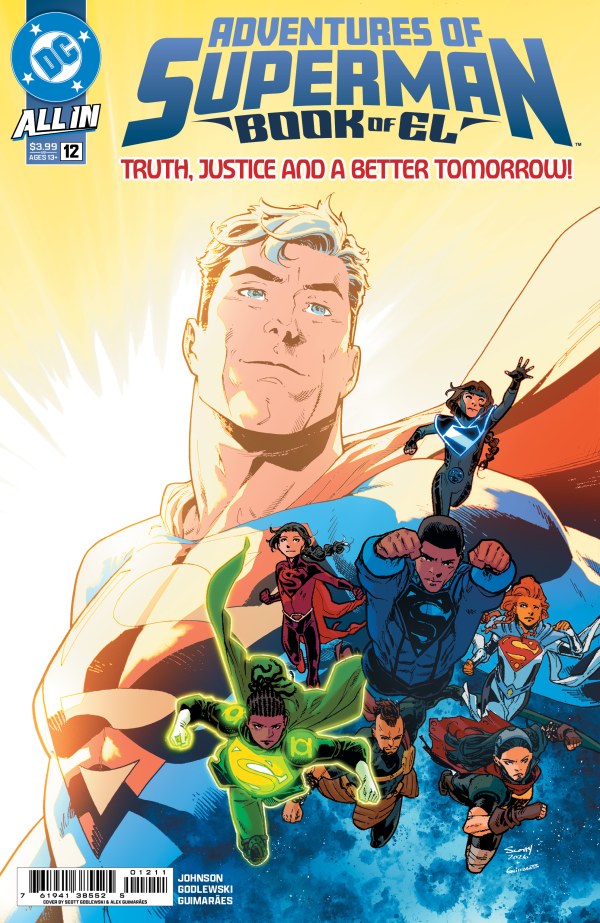
Adventures of Superman: Book of El #7
Title: Death Race
Writer: Phillip Kennedy Johnson
Art: Scott Godlewski
Main Cover: Scott Godlewski

This issue we catch up with Otho-Ra, who undergoes a sort of unexpected transformation. And honestly, the transformation makes this series feel more and more inconsequential. From the beginning, the main problem with this book has been the sense that it’s not anchored to the Superman that we’re reading elsewhere, even though it’s ostensibly in continuity. But having a Superman in a future that believes he’s gone is already a red flag – it virtually guarantees that there’s going to be a reset button before the end. That’s especially true since the main books are currently dealing with the fact that Superman is missing in the wake of DC KO. That was a more engaging disappearance, and we’re following it everywhere, not just in this one little corner of the world. Furthermore, the change made to Otho in this book makes it feel even MORE clear that either it’s going to be dialed back entirely or (and I suspect this is going to be the case in the end) both Otho and Osul-Ra are going to be out of the picture once this is all over.

When I decided to do “Superman Stuff” here in the blog I intended to use it, at least partially, to drop my thoughts on the new Superman books as they come out. I don’t know if I’ve got it in me to keep covering the back end of this series, though – I feel like I just keep trotting out the same incomplete feelings issue after issue, and I’m sure that’s no more fun for you guys to read than it is for me to write. 

Mad About DC #1
Main Cover: Dan Panosian

When I trotted out “Parody Week” last summer, I was saddened to discover that most of the old Mad magazine parodies of Superman just…don’t hold up. They aren’t all that funny anymore. But despite that, I decided to pick up this one-shot full of short parodies primarily because it is NOT by – as they usually credit the writers and artists – the “usual gang of idiots,” but rather actual DC creators like Chip Zdarksy, Mark Waid, Gail Simone, Colleen Doran, and a host of others. The question, then, is whether the people who actually make this stuff do a better job of making fun of it than those who don’t?

I’m glad to report that, for the most part, the answer is “yes.” Early on get some good stuff, like Tini Howard’s “Five People You Meet at a Convention” and Mark Waid’s legitimately hilarious “First Meeting of Harley Quinn and Ambush Bug.” The Superman-specific stuff is a mixed bag. Gerry Duggan and Tony Moore’s “Humanity is the REAL Kryptonite” is three pages of recycled jokes (which I guess is appropriate for a Mad special). Colleen Coover has a much fresher (and funnier) take on the characters with a one-pager devoted to Lana Lang’s dating life after breaking up with the former Superboy, and Chip Zdarsky himself contributes the amusing “Know Your Kryptonite.”

In general, I find that the same stuff I discovered when reading the old Mad magazines last year holds true here as well. The parody is best when it’s a bit more generalized, poking fun at character tropes or the comic book culture. When they try to get more topical – there are several gags that are there to mock the tech industry, for example – it starts to feel a bit more like the creator is climbing a soapbox and it reduces the impact of the humor in a way that will be even more profound if somebody comes back and reads it a few years from now. This stuff always works best when it comes from a place of affection. When it gets vitriolic, that’s when I lose interest.

Fortunately, most of this book seems to focus more on the former than the latter. 

Supergirl #12
Title: Hero of Kandor Part Two (A Reign of the Superboys tie-in)
Writer, Artist, & Main Cover: Sophie Campbell

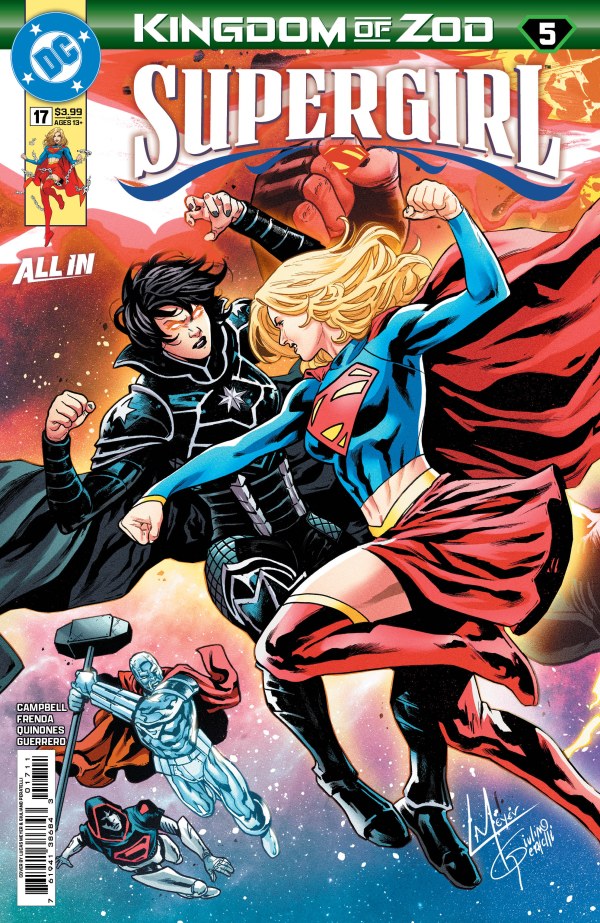
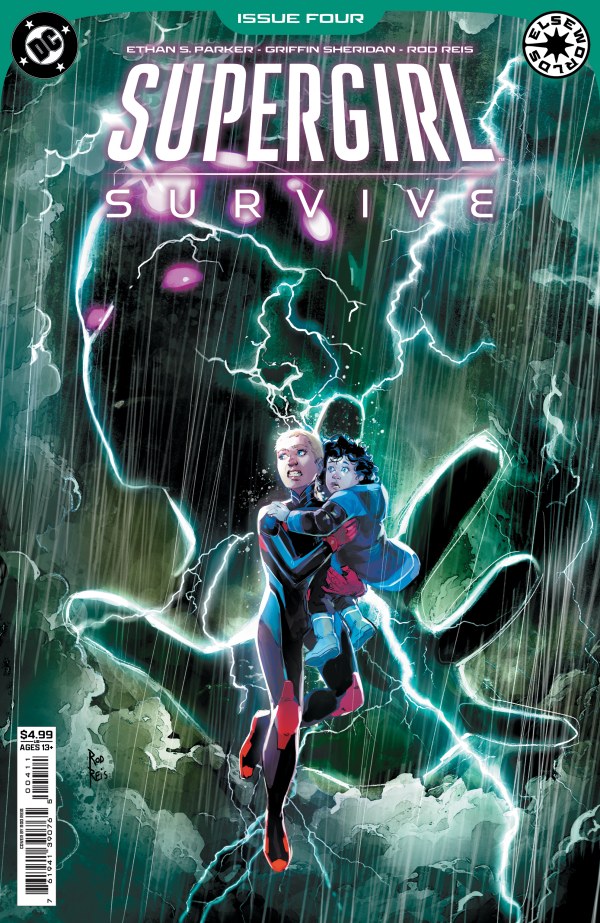
Supergirl awakens from the injuries she received last issue only to find that one of Kandor’s scientists has taken rather…extreme measure to see to her survival. I mean, you can see the cover, I don’t know why I’m dancing around it. He cyborgs her. And she is, understandably, not happy about it.

Interestingly, though, that’s not the main thrust of this issue. As scientist Kim-Da tries to explain the struggles Kandor has been undergoing – specifically the fact that any organism born in Kandor in the last three decades has found itself unable to survive outside of the bottle – Kara also learns the measures that have been taken to defend the bottled city. I’m actually kind of glad to see the reveal here that one of last issue’s revelations was something of a fake-out. It’s a big deal, but a different big deal than we were led to believe, and it opens the issue up to some of the sort of social commentary that good science fiction can pull off. The things that Kim-Da has done are questionable, to be certain, but it invites a parallel to certain real-world scientific issues without beating the reader over the head with them, which is the way that such things should be done. There’s action here, but it’s almost an afterthought, with most of the book taken up with heated conversation.

“But wait, Blake,” you’re saying, “the cover says this is a Reign of the Superboys tie-in.” Well, technically, I guess. Conner Kent appears, but only on the first few pages, and he and Lena Luthor go looking for Kara only to find that Kandor is rather disgustingly cut off from them both. I’m almost starting to suspect that editorial told Sophie Campbell that Conner needed to be in this story arc so she just found anywhere to slot him in that she could, since his contributions to the story thus far have been negligible. The scene with him and Lena is interesting, though. We’re reminded that one of Connor’s DNA donor “fathers” is, in fact, Lena Luthor’s father Lex, and although they never use the words, there’s a casual bickering between the two of them that feels very much like a brother and sister. I quite like that.

Campbell’s artwork has shifted slightly for this story arc. Although the early issues had very light lines that were almost cartoonish in their appeal, the Kandor story has taken on slightly harsher angles and more detail to fit the science fiction-ish tech of Kandor. Complete with darker colors by Tamara Bonvillain, someone who hadn’t looked at this book since the first issue might even suspect it had a different artist entirely at first. But the art shift is justified by the story, and I’m okay with it.

Action Comics #1097
Title: Future Shock (A Reign of the Superboys tie-in)
Writer: Mark Waid
Art: Skylar Partridge
Main Cover: Ryan Sook

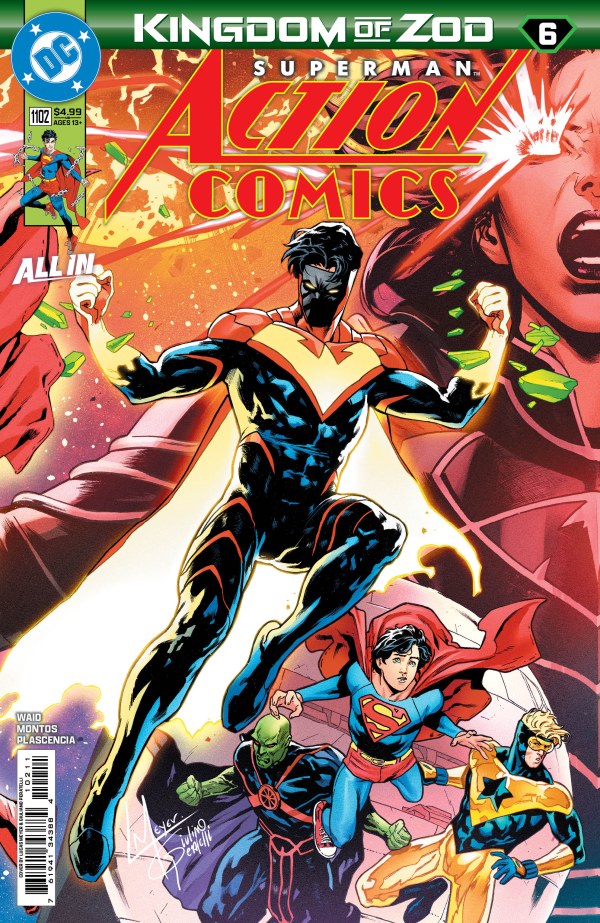
Another glorious issue by Mark Waid and Skylar Partridge. Superboy is greeted by a most unexpected trio: J’onn J’onzz, Mary Marvel, and Booster Gold. The reader (but not Clark) knows that these three are searching for Clark’s own future self, missing since the events of DC KO, but they have to strive to keep Clark from learning too much about his own future while, at the same time, helping to protect him from a threat he’s not quite ready for: Epoch, the Lord of Time.

I’m pretty sure that Waid is patterning this as Clark’s first encounter with other superheroes, save for Captain Comet (who appeared in a few earlier issues of this run). It’s certainly his first encounter with visitors from the future, but there’s a moment that is no doubt intended to invoke another time travelling trio that Clark has been associated with. 

It rubs me just a teeny bit the wrong way that Waid makes a running gag out of Mary and J’onn trying to prevent Booster from blowing secrets about the future. He’s the most seasoned time traveller out of all of them, and he’s undergone so much character development over the years that it feels a little cheap to dial that back. He buys it back just a little, however, by implying that his carelessness might be a reversion spurred by his recent torture at the hands of Darkseid, which makes it easier to swallow.

The best stuff in this issue, though, comes between Clark and Mary. It’s the first time he’s ever met someone so young with powers of her own. I’m pretty sure that Mary is, canonically, college-age these days, which makes her only a few years older than Clark in this issue, something which in no way goes unnoticed by the young man. The character relationships being built here are very unusual, but in no way forced or unnatural. It all feels like the pieces are falling into place as they should.

DC/Marvel: Supergirl/Blade #1
Writer: CRC Payne
Layouts: Mikel Janin
Finishes: Hugo Petrus

Wrapping up this week we have a surprise drop, the DC Universe Infinite exclusive digital comic DC/Marvel: Supergirl/Blade #1. As they did last fall with a pair of unannounced team-ups between Thor and Shazam, then the Flash and the Fantastic Four, Marvel and DC once again dropped a pair of digital-first crossovers on us. I’m only going over the Supergirl/Blade issue, but if you’ve got the Marvel app as I do, by all means, go enjoy It’s Jeff/Aquaman

The X-Men’s old foe Mojo is putting together a new series, and the algorithm gives him a can’t-miss formula that leads him to abducting Supergirl and Blade to be the stars of his new vampire romance series. It’s great – while this pairing doesn’t make nearly as much sense as any of the others that we’ve seen in this recent spate of crossovers, the fact that it’s so bizarre is actually a plot point here, and a pretty funny one at that. 

Mojo hits Supergirl with a Kryptonite infection to bring her powers a bit more down to Earth, and she and Blade quickly find themselves coming face-to-face with some of Mojo’s Nosferatu. The story itself isn’t really groundbreaking or anything, but the odd couple dynamic works way better than expected. The only thing these two really have in common with one another is determination, but when it’s just the two of you against a legion of vampires, that’s enough to fuel the plot. From there it’s just a matter of giving us character interaction, which comes across as sincere and entertaining. It’s always nice to get a surprise gem like this one, so if you’ve got the DC Universe Infinity app, go check this one out right now. 

Blake M. Petit is a writer, teacher, and dad from Ama, Louisiana. His most recent writing project is the superhero adventure series Other People’s Heroes: Little Stars, volume one of which is now available on Amazon. Don’t forget, you can check out earlier blogs in the Year of Superman/Superman Stuff Archive! Got a request for a future “Superman Stuff”? Drop it in the comments!

Geek Punditry #169: You Can’t Make It Make Sense

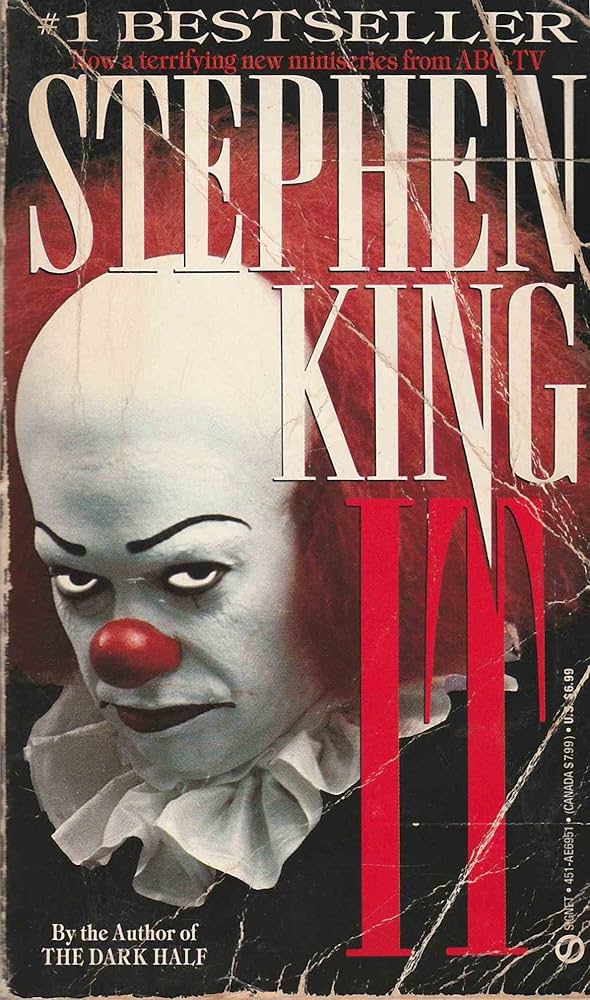
Despite the fact that it’s April already, I’ve only read a handful of novels so far this year. The reason for this, I should point out, is that I spent a good two months on a trio of absolute doorstoppers: first Stephen King’s It, followed by the first two books in Scott Sigler’s Crypt series, both of which are sizable in their own right. After these satisfying – but weighty – tomes, I wanted to tackle something quicker and lighter next. And the choice I made has me laughing in all the ways the writer did not intend.

SpongeBob already did the “ghost ship” thing anyway.

I’ve written before about “Extended Universes,” those non-canonical stories that are set in the fictional universes that we know and love. These are things like the comic book or novel series that spin out of popular movies and TV shows (Star Wars perhaps being the most famous of these), but it also works the other way around – movies and TV shows that adapt or spin out of comics and novels. Looking for a quick read, I decided to go old-school and enjoy the 1988 novel Ghost Ship by Diane Carey, a quaint little historical curiosity in that it was the first novel ever published based on the then-new TV series Star Trek: The Next Generation. And while I can’t necessarily blame Carey for the novel, holy CRAP, is this one a doozy.

The story – set during the first season of the TV show – regards an alien creature that absorbed the life-essences of the crew of a Soviet aircraft carrier 300 years earlier, and who is now endangering the Enterprise. Complicating the matter is that Deanna Troi, the ship’s empathic counselor, can sense the tortured spirits of the Russians inside the alien beast. It’s a perfectly reasonable sci-fi concept, the kind of stuff that we’ve seen in various Star Trek series several times. And it certainly isn’t Carey’s fault that the Soviet Union collapsed prior to 1995, when the sailors in her book were attacked by the alien. The book even tackles some heavy concepts like the nature of life and spirituality, with an interesting side-conversation about whether releasing the “essences” of the sailors from the beast would count as euthanizing them and, if so, if that would be morally acceptable. 

But it’s really hard to take any of that seriously, because the characters in this novel are so far removed from those that we know from the TV series that it’s like reading about an entirely different crew. Captain Picard is stern, overbearing, foul-tempered, and expresses constant regret over the fact that he allowed Wesley Crusher to become an acting ensign. Data’s concerns about his own humanity (or lack thereof) are taken to a nearly pathological level. Troi calls William Riker “Bill.” Perhaps the most egregious line in the novel is a point where Riker glances at Tasha Yar and thinks that her soft features and wide eyes make her look like a “Disney drawing.”

Remember the time Snow White dressed like this?

For people who love the TV show, the whole thing comes across as patently absurd. But again, I don’t think that this is necessarily Carey’s fault, but rather a consequence of the way that books like this are written…or at least, the way they were written back then. In order to get novels like this one in bookstores at the same time that the TV series made it to the airwaves, writers had to start working from early drafts of the screenplays. Even though Carey was telling an original story rather than adapting a specific episode, she had to base her characterizations and mannerisms on what was written in the series bible and early scripts. It’s likely that there were no episodes of the show available for her to watch yet as she wrote the book – hell, it’s possible that none had even been filmed yet. She had to make assumptions based on what she was given. But characters in an ongoing serial like a TV series change and evolve over time, especially in the early seasons. There would have been no way for her to know how they would wind up being played when she started working on this first book. Because of all this, Ghost Ship is even harder to reconcile with TV canon than many of the other novels, not because it blatantly contradicts any plot or world-building elements, but just because the characters are so unrecognizable. 

This sort of thing tends to happen a lot when you’re creating extended universe material based on “official” works that aren’t finished yet. At least one early novel from the Star Trek: Voyager series, for example, refers to the holographic doctor on the ship as “Zimmerman.” People who know the canon of the series know that Zimmerman was the name of the doctor who programed the Emergency Medical Hologram and based its appearance on his own, but may NOT know that at one point in the planning stage of the series the plan was for the holographic doctor to adopt his “father’s” name. That plan was dropped in favor of a sort of running character arc about him trying to choose his own name, but eventually, even that went away and he just went by “The Doctor” for the entirety of the series. 

It also happens in comic book adaptations. DC released a Next Generation miniseries to coincide with the first season of the show, and it featured some wildly out-of-character moments. There’s a scene where Geordi LaForge is (mistakenly, of course) presumed to be killed by Q, and Data flies into a violent rage. Data. The character who is famously emotionless. Now I’ve always believed that even Season One Data isn’t TRULY emotionless – there’s just no way to reconcile a lot of the character beats with someone who genuinely has no emotions, let alone the fact that his dominant character trait is that he WANTS emotions. (Desire, itself, is an emotion, in case you don’t understand the contradiction.) I think it’s better to think of Data as somebody who does not UNDERSTAND his emotions or how to process them, and therefore mistakenly believes he does not have them at all. All that said, Data’s willingness to throw hands just simply does not jive with the character he was in Season One. Hell, it wouldn’t even match who he became by the last season of Star Trek: Picard. 

Again, this is a character defined by his LACK of emotion.

Sometimes, especially with comic books, the differences are visual. One of the most famous examples comes from the Marvel Comics adaptation of The Empire Strikes Back. After adapting the original Star Wars movie, Marvel continued the comic book as an ongoing series, which itself would cause several continuity snarls when the sequels came around, such as encounters with Darth Vader that don’t really make sense in later canon, or scenes that hinted at a romance blossoming between Luke Skywalker and Princess Leia that would later turn out to be particularly squicky for…obvious reasons. But one of the most hilarious of these changes is Yoda, whose first appearance was in Empire. When the Star Wars comic adapted that storyline, artists Al Williamson and Carlos Garzon either weren’t given a photo reference of Yoda to work from or the design of the puppet was changed later. I’m not sure which, but either way the result was a short little goblin with blue skin and long, flowing white hair, a far cry from the Yoda that fans who bought the comic book could see in the movie that was in theaters at the same time that the comic was being published. For later reprintings of the comic, Yoda was re-drawn to more closely match his cinematic appearance, but it’s not hard to find the original panels online for the sake of comparison and – let’s be honest here – mockery.

Including this picture just in case anybody was worried about sleeping too well tonight.

Movie novelizations are typically based on early drafts of the script, which can make it fun to read them and find things that were cut out of the film, then try to determine WHY they were left out. The Goonies novelization, for example, contains a long sequence in which the kids take a ride on a raft along an underground river, making it more plausible just how far away their final destination is from their point of origin. There are a lot of really good character moments in this scene, as the kids talk and discuss their various fears and anxieties, but you can totally understand why such a relatively slow sequence was never filmed for the lighthearted adventure film that the final Goonies became. Similarly, we all remember the scene in Ghostbusters in which Ray Stantz talks about having to mortgage his family home in order to afford the iconic Ghostbusters Firehouse. If you ever want to get into the intricacies of the Stantz family and just how he came to inherit the property in the first place, there’s a whole sequence in the novelization that details just that information, and it would have been boring as hell to relate on screen.

But will audiences understand this if we don’t go over how escrow works?

You don’t see as many of these adaptational oddities as you used to. The lead time for producing movies and TV shows gets ever longer, and not only are there fewer novelizations and comic book adaptations than there used to be, but there seems to be less of an urgency to get them onto the shelves at the same time as the movie or TV show is released. You still have tonal problems at times, of course. Last year David Newton released Welcome to Metropolis, a “prequel” novel to the new James Gunn Superman movie, and although it doesn’t have any glaring contradictions to the finished film, the characters and world just feel “off,” as though they were written by somebody who knew ABOUT the movie, but didn’t actually KNOW the movie.

Kinda like the Diane Carey novel that started this whole thing in the first place, actually.

But although I suppose having these books – when they happen – fit the canon a little better is TECHNICALLY a good thing, I kind of miss the days of wild inaccuracies and scenes where the cold, emotionless Data goes into a blind rage. It was weird, but it was also fun. 

Blake M. Petit is a writer, teacher, and dad from Ama, Louisiana. His most recent writing project is the superhero adventure series Other People’s Heroes: Little Stars, volume one of which is now available on Amazon. He’s also started putting his LitReel videos on TikTok. After Ghost Ship, based on the recommendations of several friends, he has moved on to begin reading Dungeon Crawler Carl. You people are deranged. 

Superman Stuff #13: DC/Marvel: Superman/Spider-Man #1

At last, the time has come! After months of waiting, DC Comics blessed us this week with the first of the two crossover books featuring Superman and Spider-Man, and as promised, there’s a bounty of back-up stories as well. As with any anthology, some of the stories are better than others, so this time out I’m going to give you my thoughts on each of them.

DC/Marvel: Superman/Spider-Man #1
Main Cover: Jorge Jimenez, although it should be noted that there are – at current count – FORTY-ONE different covers to this book, and while I’m absolutely NOT gonna shell out $8 a copy for all of them, if DC and Marvel put out a special that collected all of the various covers from this book and the Marvel book coming out in a couple of months, I would 100 percent purchase it.

Title: Truth, Justice, and Great Responsibility
Writer: Mark Waid
Art: Jorge Jimenez

In our main story this issue, Dr. Octopus is messing around with an AI assistant that turns out to be Superman’s old foe Brainiac, which just goes to show you that using ChatGPT is just bad news. Clark Kent and Peter Parker, meanwhile, are working together on a story about the theft of some radioactive materials…including Kryptonite.

Mark Waid does something truly unique with this story. In the universe he’s created here, he presupposes that Superman and Spider-Man – and more specifically, Clark and Peter, have a history together. And I don’t just mean the previous crossovers between the two that have happened in the past (all of which are decades old). No, reading this book you get a clear feeling that this is an incarnation of DC and Marvel’s respective flagship characters that have had a great number of adventures together that we, the reader, have not been privy to. Most crossovers start with the characters meeting each other for the first time. If we’re lucky, they’re at least aware of the others’ existence, but they’ve never encountered each other before. This book instead implies a whole shared existence between the two that feels so fresh and so RIGHT, and makes me wish there were more stories coming beyond just the Marvel book.

Like seriously. DC. Marvel. Get Waid working on a 12-issue maxiseries showing the entire history of this Multiple World’s Finest duo, like YESTERDAY.

Jorge Jimenez on the art is the icing on the cake. He’s got a great take on each of our heroes and both of our villains. The story looks as good as it reads. The lead story is a home run. 

Title: Lois & Mary Jane in “The World’s Finest”
Writer: Tom King
Pencils: Jim Lee
Inks: Scott Williams

Tom King’s Lois and Mary Jane story is next, and this is an interesting one. As Superman and Spider-Man duke it out with a rogue Sentinel (is there any other kind?), Lois and MJ go about a sort of casual conversation amongst the chaos about what it means to be them, the women in the lives of two of the world’s greatest heroes. It’s a really interesting way to frame these two, using their unique shared perspective in a way that wouldn’t really work with any other two women in comics. Using the backdrop of the Sentinel fight instead of just having them meet for lunch or something (as they do on the Terry Dodson variant cover) gives it a different flavor that makes it feel more unique. I feel like this one is intended to be in continuity with Waid’s story, and if that means this shared universe is one where Pete and Mary Jane are still together, I want more stories set in this universe even MORE.

Title: Superboy-Prime and Spider-Man in “Pages”
Writer: Christopher Priest
Art: Daniel Sampere

I really wasn’t sure what to expect out of this pairing. We’ve often seen Superboy-Prime using his knowledge of DC Comics (coming from a universe where those are all fictional) to navigate his world on more than one occasion. Christopher Priest here supposes that if DC Comics are fictional to Prime, it stands to reason that Marvel is too. (And I suppose every other publisher, by extension, but let’s just stick to Marvel now.) Prime uses his ability to travel the Multiverse to move back in time to a point in Marvel’s history shortly after Peter Parker got rid of his symbiote costume, when he was wearing a black suit made out of traditional fabric, and the confrontation between the two of them seems to unlock something in the boy.

Prime has been on something of a redemption arc in the comics as of late. This story actually feels like it could be the beginning of that, as if it logically should take place prior to his appearance in recent issues of DC KO. I have to admit, for a kid who modeled himself on Superman and stumbled so badly, I kind of like the idea of an encounter with Spider-Man being the thing that sets him back on the right path.

Title: Superboy and Spider-Man 2099 in “Beyond the Cobwebs of Tomorrow”
Writer & Artist: Sean Murphy

Miguel O’Hara, Spider-Man 2099, is on the run. I know, what else is new? But as he flees from the authorities, we realize that he’s not in the 2099 that we’re used to, not exactly, and that idea is driven home even harder by the sudden appearance of a time-tossed Superboy and a special guest star. As our heroes compare notes, they come to realize the real threat they face and…

…and that’s it. The story ends with the team-up forged and our heroes barrelling off to take care of business. But the problem is, that isn’t really a story. This is, if anything, the first CHAPTER of a story, and an incomplete chapter at that. I get that these backups have a pretty limited number of pages, but this whole sequence comes across as a tease of something that I really want to read. Teasers are only fun, though, if what’s being teased eventually reaches you to be read. Despite a fun team-up and some well-executed pages, this is the first story in the book that I feel is a little bit of a letdown.

Title: Jimmy Olsen and Carnage in “Jimmy Con Carnage”
Writer: Matt Fraction
Art: Steve Lieber

Fraction and Lieber, the creative team behind the Superman’s Pal Jimmy Olsen miniseries from a few years back, reunite for the wildest pairing in this book. Jimmy’s meandering has led him to leave Metropolis for New York and get a job as the newest photographer for the Daily Bugle. And like ALL Bugle photographers learn, J. Jonah Jameson has one edict: PICTURES OF SPIDER-MAN. The only problem is that new-to-town Jimmy doesn’t even know what Spider-Man looks like. Doesn’t even know about the hyphen.

I know these stories are out of continuity, but it’s crazy what they allow Fraction to get away with in this one. It’s crazy, for instance, that Jimmy somehow has never seen one of Peter Parker’s 17 million photographs of Spider-Man. It’s crazy that he thinks Carnage matches the description. It’s crazy the significance that a hyphen plays in this story. It’s hilarious and ridiculous in all the ways that Jimmy’s solo series was, although with a bit more finality. 

Title: Jonathan Kent and Ben Parker in “The Bridge”
Writer: Jeff Lemire
Art: Rafa Sandoval

This story (another one that feels like it belongs in this combined world) is a quick snapshot, Jeff Lemire bringing us a sweet glimpse at the adoptive fathers of our two heroes. A chance meeting, many years ago, brings Ben Parker to Smallville, Kansas just as a massive rainstorm threatens people in town, and Lemire shows us the kind of steel that forged Clark and Peter into the men that they are. Nothing particularly surprising in this one, just a good, simple encounter that feels like a minor but welcome detail in this strange world that they’re building.

Title: Bias
Writer: Greg Rucka
Art: Nicola Scott

This one, too, feels like a little snapshot. Jack Ryder’s program has a pair of special guests, Lois Lane and Jonah Jameson, on the air debating the concept of media bias. Lois calls Jonah out on his anti-Spider-Man stance, and Jonah responds.

There’s not much else to say about this one, honestly. Like the Lemire story, it feels like a detail added in to populate the world. I appreciate how well Rucka casts each of these characters, up to and including Jonah’s defense for his position on our friendly neighborhood wall-crawler. But it’s again just a tidbit, a nugget of something more.

Title: Power Girl and the Punisher in “Blind Date”
Writer: Gail Simone
Art: Belen Ortega

Of all the pairings in the book, this one may seem the most random, until you remember that both of these characters were created by Gerry Conway, and it seems that Simone thought it would be fun to pay tribute to that. She was, of course, correct about that. In this story, Karen Starr is on her way to a blind date with – well – perhaps the most hated Marvel character of the past half-decade or so. It’s just her bad luck that the restaurant where she’s meeting him happens to be full of criminals that have been targeted by Frank Castle.

As unusual as the team-up is, Simone handles it with her usual humor and charm. Somehow she structures the story in a way that brings them together organically, while still dropping in plenty of meta-commentary about the characters and playing with who they are and just how deeply different they are, while at the same time, having more than a little in common. This may be the most unexpectedly fun story in the book.

Look, I’m not going to pretend that I’m a hard sell. This is a comic book focusing on two of my favorite characters and an all-star collection of creators. It’s a load of fun and it feels oddly as though it’s being used to build towards something larger. (I’m probably wrong about that. I hope I’m not.) At any rate, it was well worth the price, and I can’t wait for Marvel’s half to come in April. 

Blake M. Petit is a writer, teacher, and dad from Ama, Louisiana. His most recent writing project is the superhero adventure series Other People’s Heroes: Little Stars, volume one of which is now available on Amazon. Don’t forget, you can check out earlier blogs in the Year of Superman/Superman Stuff Archive! Got a request for a future “Superman Stuff”? Drop it in the comments!

Geek Punditry #168: Blake’s Five Favorite MST3K Experiments

A few weeks ago, RiffTrax surprised us all with their annual Kickstarter – not for a live show, as is usually the case, but to fund four new episodes of their parent series Mystery Science Theater 3000. At the time I wrote about three movies that I thought were worthy of the MST3K/RiffTrax treatment, and since then…well, they aren’t using any of my suggestions. There’s no accounting for taste. But the Kickstarter ended with a whopping $2.7 million, far in excess of the project’s stated goal of $20,000 (although it’s quite likely that they significantly undershot how much they actually needed to ensure that the Kickstarter would hit its target). Since then, they’ve released several videos of things like the set construction, Bill Corbett and Kevin Murphy playing with their old pals Crow T. Robot and Tom Servo, and the requisite “thank you” videos to everybody who is thrilled to see Mike Nelson returning to the Satellite of Love.

“We’ve got Kickstarter Sign!”

With these four episodes coming later this year, lifelong MSTies like myself are returning to the classic episodes and recruiting new fans to our friendly little family. And as so often happens, I’ve seen a lot of people asking online which classic episodes are the best to use to introduce a new viewer. Honestly, I’m not sure if there IS any specific episode that’s “best.” It’s not like an X-Files where there’s a specific mythology that has to be followed. Even when the Sci-Fi Channel mandated they include a story arc, they did it in such a way that the individual episodes still stood nicely on their own. The basic format of a host and two robots watching cheesy movies and cracking jokes about them is pretty universal, and you either dig it or you don’t. 

That said, there are certainly episodes that I like more than others, and that’s what I’m here to talk about today. I’m not calling these the best episodes, I’m not even saying they’re the best episodes to draw in new viewers, but I want to talk about the five episodes that I mark as my favorites from the classic era of MST3K in the 90s. The three criteria I use to make these judgments:

  1. Riffability of the film. There are a lot of terrible movies out there, but just being bad doesn’t automatically make a movie RIFFABLE. Sidehackers, for example, is an episode that I would rank relatively low on a full list of episodes just because the film itself (although awful) is too bleak to be truly funny. A really riffable movie has a delicious blend of goofy effects, lousy acting, and a sense that everybody involved was making this film under duress. Also, generally speaking, comedies aren’t great for riffing. If a movie is INTENDED to be funny and it’s bad, that means it’s…well…not funny. A movie that’s NOT trying to be funny is much more ripe for the plucking. That said, there ARE exceptions, as you’ll see in one of my choices.
  2. Quality of the riffs. This is the bread and butter of MST3K – how funny are the host and the bots as they toss their quips at the screen? This is perhaps the most subjective of my criteria, as the writers of MST3K proudly have never made an effort to make every joke accessible. There are a lot of jokes that are relatively obscure, making oblique references to history or to pop culture artifacts that are relevant to them but not necessarily to every viewer. The attitude of the writers has always been that not everybody will get every joke, but the RIGHT people will get the jokes that are for them. So judging the quality of the riffs is often predicated on just how many of the jokes in that specific episode are jokes that land with YOU. I think this is probably why so many people rank the Hamlet episode so low, whereas I love it.
  3. The host segments. Although not quite AS vital to the quality of an episode as the riffs themselves, the host segments are the spine of the show. They tell the story – inasmuch as there is one – of Joel or Mike and their respective Mads. This is where they really get to play around and have fun. Sometimes the segments are related to the movie they’re watching, sometimes they aren’t. But some of the best moments in the show’s history come from these host segments.

Finally, just a note here: as I said, my five favorite episodes come from the classic TV era of the show, the episodes starring Joel Hodgeson and Michael J. Nelson. This should NOT be construed as me saying I didn’t like the most recent seasons, those that aired on Netflix and the Gizmoplex starring Jonah Ray and Emily Marsh. Each of them had real gems of episodes that are very much worth watching. But this is a case of nostalgia bias. I’ve loved the Mike and Joel episodes for DECADES now, and as good as Jonah and Emily could be, it will be a long time before any of their episodes could match the classics in my heart.

So here they are, my five favorites, in no particular order:

Pumaman (Season 9, Episode 3)

But just WAIT until the James Gunn reboot.

This deliciously goofy movie was made in 1980, part of a small glut of low-budget superhero flicks made after the success of Christopher Reeve’s first Superman film. It stars Walter George Alton as a paleontologist who is told – after being thrown bodily out of a window by Migel Angel Fuentes – that he is the latest reincarnation of the Pumaman, a demigod tasked with guarding the Earth by a race of aliens that were worshipped as gods by the Aztecs. Fuentes has been searching for him (by chucking potential candidates out of windows) for some time, and he needs him to step up and embrace the mantle of the Pumaman – khaki pants and all – to defeat the evil Dr. Kobras, played by Donald Pleasance, who I have to imagine took this job while wishing he’d had a better contract offering profit sharing for Halloween.

This movie is absolutely abysmal. Alton is the least-convincing superhero with the worst costume possibly in the history of cinema, and when you stop and wonder how many innocent people plunged to their deaths in the quest to FIND the Pumaman, you have to wonder if it was even worth it. (The answer is yes, it was, because it gave us such a delectably bad movie.)

The riffs, as well, are on fire. Amidst ponderings about Donald Pleasance and speculation that Fuentes’ character would be better taking on the bad guy himself rather than relying on the Pumaman, we also get one of my favorite running gags. Whenever there’s a film with an overwritten, invasive, inappropriate, or just plain lousy musical score, the bots will often start making up lyrics to fit it. Even now, as I type this, I’m casually humming along and thinking of Crow T. Robot singing, “Pumaman, he flies like a moron…

Finally, the host segments. There are some classic bits in here – Mike wanting the “dry look” like the guy in the movie, but offending the hairstyling nanobot and getting more than he bargained for, Pearl Forrester throwing a ball in her castle only for no one to show up, and Kevin Murphy (usually Tom Servo or Professor Bobo) playing Roger Whittaker at the end. I can watch this episode again and again.

I Accuse My Parents (Season 5, Episode 7)

“Well? ARE you happy in your work?”

This Joel-era gem attacks a 1944 film about a young man (Robert Lowell) who spirals into a life of juvenile delinquency, largely due to the neglectful and borderline abusive nature of his relationship with his parents. The movie is framed with Lowell’s character in court, defending himself against criminal charges, and blaming his parents for his own poor choices. This was a heavy-handed morality play about the importance of parents and their children relating to each other. An important message, sure, but like so many hamfisted movies and TV shows, it delivers its point in such an over-the-top, melodramatic way that it’s impossible to take seriously. And when it’s impossible to take it seriously, that’s when Joel and the bots step in. The riffers make great meat out of the overzealous nature of the performers, latching on to the Robert Lowell character’s early essay contest win and milking it as a running gag. One of my favorite riffs in this one is Joel, as the “mother,” casually asking her husband “Do you think he’d ever accuse us?” after he storms away from one of their moments of casual cruelty. 

Host segments? How about Servo wanting to become a “real boy” by painting himself silly putty pink? The Mads inventing a cake mix that can “instantly” produce a stripper-in-a-cake, but realizing far too late the problem with such an enterprise? Or my favorite bit, Gypsy reenacting a night club scene from the movie as Crow and Tom play waiters and Joel plays the various nightclub patrons with the help of a pencil mustache and some shoddy wigs? Gypsy was such a delightful character in the early years, so simple and earnest, and whenever she was allowed to play along with the boys’ shenanigans, it was great fun. 

Hobgoblins (Season 9, episode 7)

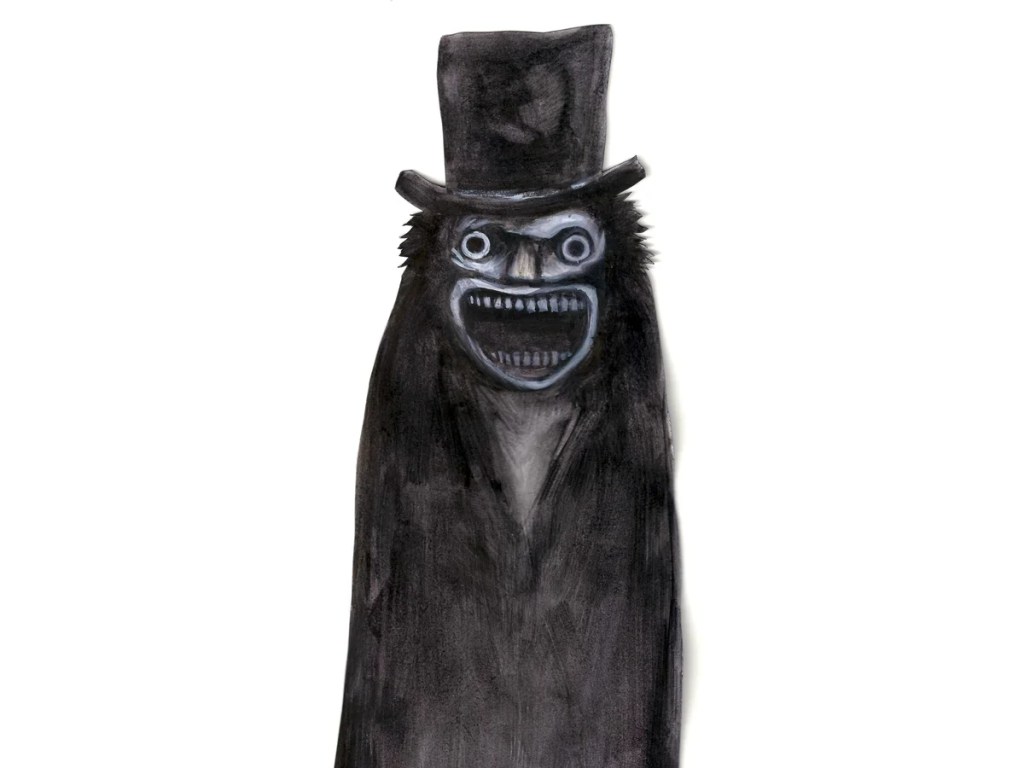
The prequel to The Babadook was weird.

I didn’t realize until I sat down to make this list just how many of my favorite MST3K episodes came from so late in the original run. This one, Pumaman, and honorable mention Hamlet are all late-series gems that prove they hadn’t lost their steam even nine years in.

This Rick Sloan clunker from 1988 is one of a series of post-Gremlins movies that tried to capitalize on a pack of scary, little monsters. In this one, a bunch of teenagers find the Hobgoblins, aliens that have been kept under wraps at a movie studio for decades, who have the ability to cause their victims to hallucinate their fondest wishes. Those wishes turn to nightmares, though, as the Hobgoblins slaughter them. The premise could actually make for a legitimately scary movie, but the characters, the nature of their hallucinations, and the Hobgoblin puppets themselves are so silly that there’s no way to take them seriously.

To be fair, though, this is an instance where I don’t think there was ever any real intention to be taken seriously. Hobgoblins was an attempt at horror/comedy, much in the same vein as Gremlins, only much stupider. It’s the rare exception to the rule that mocking a bad comedy doesn’t make for a good riff. In this case, the riffs are usually in the vein of making note of just how terrible the characters are, cracking jokes as the Hobgoblins themselves, and many, many comments about the sheer Eighties of it all. (Mike famously sings at one point, “It’s the Eighties! Do a lot of coke and vote for Ronald Reagan!”)

The best of the host segments in this one play off of just how bad the movie is. For instance, Tom and Crow try to flee from the movie during the opening credits. Later, Crow sets up a crisis hotline for people who have been subjected to the movie Hobgoblins. As the film gets worse and worse, Mike and the bots try to sneak out of the theater and put up some cardboard cutouts that sing a painfully cheesy song about the Hobgoblins to cover their escape. It’s all good stuff.

Santa Claus (Season 5, Episode 21)

The REAL question is how she can knit with no hands.

Both of the hosts of the original era got a Christmas episode. Joel’s was the legendarily bad Santa Claus Conquers the Martians, but I actually prefer Mike taking on Rene Cardona’s 1959 stinkeroo Santa Claus. In this Mexican movie, Santa Claus sits in his cloud-based castle and watches the Earth through a series of creepy and disturbing devices as his helpers – a legion of children from around the world whose parents don’t seem to notice they’re missing – prepare for his Christmas Eve journey. On this particular Christmas we see Pitch – a minion of Satan that comes right off a can of Underwood Deviled Ham – target a young girl named Lupita. As he tries to tempt her to be naughty, Santa sets out to save her.

This is ostensibly a children’s movie, but it’s hard to imagine a child watching it and not being immediately terrified of how disturbing Santa’s workshop (the most famous of his many “homes and offices”) actually is. From a computer with a giant human eyeball and lips to a sleigh driven by reindeer who look and move like animatronics from the world’s cheapest amusement park, it’s baffling that this film ever made it out the door. Naturally, this is perfect fodder for Mike and the bots. Much of the humor comes from mocking how disturbing all of this is and questioning Pitch’s credentials as an actual agent of the damned. 

The host segments are Christmas-themed as well, such as a concert by the metal band Santa Kläws, a Nelson family reunion for Mike (with the wrong Nelson family), and a gift exchange where we get to see just how far in advance Gypsy plans these things. I pull this episode out and rewatch it nearly every year at Christmastime. 

“Manos” The Hands of Fate (Season 4, Episode 24)

This is what Martin Scorsese means by “cinema.”

Perhaps the most infamous MST3K episode of all time, “Manos” The Hands of Fate (the quotation marks are part of the title) is a 1966 contender for the worst movie ever made. Written by, directed, and “starring” Harold P. Warren (the quotation marks are mine that time), this film is about a family on a road trip who get lost on their way to a lodge and wind up asking to stay the night at a creepy house tended by a misshapen man named Torgo (John Reynolds), who takes care of the place “while the Master is away.” The Master, of course, shows up, and things are excessively creepy not because the film succeeds in being frightening or atmospheric, but just because it’s particularly icky.

This film is legendary. Allegedly made when Warren made a bet that he could make a movie on a barebones budget, the movie was filmed with a camera that couldn’t record longer than 32 seconds at a time (not a joke or an exaggeration , people) and had no audio recording capabilities, so ALL the voices had to be added in post-production. It is astonishing that it is even physically possible, when making the thousands of creative choices involved in the production of a motion picture, to make the WRONG decision literally every single time, but Warren apparently pulled it off. The movie (justifiably) fell into obscurity until MST3K found it in 1993, and since then it has risen from the ashes to become a cult classic.

Having a film this bad, obviously, gives the riffers plenty to work with, playing with the quality of the production, or lack thereof. One of Joel’s best quips, for example, is “every frame of this movie looks like someone’s last known photograph.” The host segments are particularly hilarious, as they mock the excessive driving scenes in the movie, and Mike Nelson (before becoming the MST3K host) pops in as Torgo delivering a pizza. You want to know how bad this movie was? Dr. Clayton Forrester actually APOLOGIZES to Joel for sending them “Manos,” admitting that he may have gone too far this time. 

It’s a masterpiece.

We could do this all day, friends, but there are only so many pixels on the internet. These are my favorite MST3Ks as of when I write this list, but if I came back and made a list again a week from now, it very well could change, adding the likes of Hamlet, Overdrawn at the Memory Bank, Time Chasers, The Beginning of the End, or any of the Gamera or Hercules films. How about you – which episodes of MST3K are on your upper tier? And how psyched are you for the RiffTrax experiments? 

Blake M. Petit is a writer, teacher, and dad from Ama, Louisiana. His most recent writing project is the superhero adventure series Other People’s Heroes: Little Stars, volume one of which is now available on Amazon. He’s also started putting his LitReel videos on TikTok. He is 119 percent psyched for the RiffTrax experiments, by the way. Since you were asking. 

Superman Stuff #12: Reviews for March 4-18!

Subscribe to continue reading

Subscribe to get access to the rest of this post and other subscriber-only content.

Geek Punditry #167: Mish, Mash, Consolidation’s a Smash

The bidding war is over, and after a protracted tussle over the fate of the grand old movie studio called Warner Bros, the winner – shockingly – seems to be Paramount. Over the last few months we’ve watched as Warner Bros, which of course has expanded far beyond being a movie studio to being a full-blown media empire, was put on the market. We saw it get snapped up by Netflix, we saw as Paramount entered the game with a hostile takeover bid, and we saw them continue to sweeten the pot until Netflix stepped back and threw in the towel. And now, pending government approval and all sorts of other rigamarole that will tie things up for a while, it seems as though Warner Bros will become another star on the Paramount mountain.

One big, happy family.

Feelings about this are…complicated, to say the least. Generally speaking I’m not a fan of the massive media consolidation we’ve borne witness to this century. Fewer players in the game means less competition, and fewer outlets for fewer voices. And sure, we live in an era where anybody can theoretically build an audience and a following using social media, but in practice, the big companies are always going to have an edge. Even when a new player comes along – an A24, for example – they’re going to have an uphill battle when it comes to staying relevant next to the likes of Disney, Sony, and whatever this new Paramount/WB hybrid will be called once it’s all over.

That said, if it HAD to be between Netflix and Paramount, Paramount is the company I feel will be better for people who want movie theaters to survive, no matter what Netflix claimed. And if it’s happening whether we like it or not, I’m not in the mood to debate it. I would rather talk about what’s going to happen when the properties of these two corporate monoliths are under one roof.

What’s going to happen when Warner Bros – the company that owns DC Comics, DC Studios, the Looney Tunes, Hanna-Barbera, Harry Potter, and countless other properties – is folded under the umbrella of the company that controls CBS, Star Trek, Nickelodeon, SpongeBob SquarePants, and the Teenage Mutant Ninja Turtles? This is going to be mostly speculation, of course – I’m the first to admit that I don’t know anything. But I’m going to throw out some ideas and discuss some concerns about what’s going to happen. And keep in mind that all of this is dependent on how long it takes for the deal to be complete, as well as how long it takes for existing licenses and deals to expire, so I can’t really put a specific timeline on any of this. 

“Let’s call it PARAMAX.”
“For the last time, Curtis, NO.”

One thing we CAN be sure of is that there’s going to be a change in the respective streaming services. Paramount has already indicated that eventually they intend to fold HBO Max into their existing Paramount+. When this happens, one can only hope they don’t decide to double the price on whatever the remaining service will be. Furthermore, I really hope that they use the technology behind HBO Max, because of all the major streamers I’ve used I’ve found Paramount+ to be the buggiest and most annoying. Honestly, if I didn’t love Star Trek so darned much I would have abandoned it entirely.

What content will there be, though? Warner Bros has had a terribly frustrating habit of sending out some of their properties, including movies and TV shows that were once on HBO Max, to other streamers like Netflix, Amazon Prime, and most recently Tubi (which picked up a gargantuan selection of WB cartoons). I would like to believe that Paramount would be smarter with its properties than Warner Bros was, but I would be kidding myself. Remember, Paramount+ was launched (originally as CBS All-Access) with the promise that it would be the home for everything Star Trek. Then they cancelled Prodigy after one season and Netflix saved season two, but now that deal has expired and it can’t be found anywhere. What I’m getting at is that both of these companies can be pretty boneheaded about what to do with their legendary properties, so having a singular service – whatever form it winds up taking – will be no guarantee that you can find everything you want under one roof.

Over in the Comic Book Collecting group I help moderate on Facebook, a user asked if we thought that the Ninja Turtles – now that they’re corporate siblings – would be added to the DC Universe. This is something I find particularly unlikely. Although DC has a proud and storied history of absorbing the superhero characters of other defunct publishers that they’ve purchased, the Ninja Turtles are too valuable an intellectual property in their own right to make them part of a different one. It’s the same reason that Disney never made Anna and Elsa from Frozen an official part of the Disney Princesses merchandise line – they make too dang much money on their own to mash them together with everybody else.

That said, although I do not foresee a future in which Donatello becomes the new leader of the Teen Titans or anything, I think that being under the same corporate umbrella will make crossovers easier and more likely. It’s happened before. The Turtles have had four separate comic book crossovers with Batman, one of which was adapted into an animated movie, and they’ve freely crossed over with dozens of other properties over the years – Ghostbusters, Strangers Things, Masters of the Universe, Mighty Morphin Power Rangers, Naruto, and that’s just off the top of my head. Having them cross paths with the Justice League is in no way out of the question. Heck, having them cross paths with Bugs Bunny isn’t out of the question.

“Dude, our dad is like, a bat without wings! We could be cousins!”

Just because I don’t think the Turtles will be part of the DCU, though, that still raises the question of who is going to publish them. The Turtles have been licensed to IDW Publishing for many years now. So have other Paramount properties, most prominently Star Trek. And just last year, IDW launched a new IDW Dark line of horror comics, including several series based on Paramount properties such as The Twilight Zone, Event Horizon, A Quiet Place, and Smile. I don’t know exactly how long those contracts have left, but once Paramount owns one of the Big Two comic book publishers, will they really want to continue licensing their properties to one of the…Fluffy Five? I need better nicknames.

“Move? We just GOT here!”

It’s possible that Paramount would move the comic book licenses for their properties over to DC, but it’s by no means certain. After all, DC hasn’t done a ton of licensed comics in recent years, aside from the occasional crossover or a book based on one of their current corporate siblings. They’ve published Star Trek before, of course, but that was nearly 30 years ago, and there hasn’t been any indication that they would be interested in doing so again. And even now WB properties have had recent comics published by companies other than DC, such as Cartoon Network comics published by IDW or the current Space Ghost and Herculoids comics produced by Dynamite. 

And recent comic book history has made it quite clear that sharing a parent company isn’t necessarily a guarantee of comic book consolidation. When Disney bought Marvel Comics in 2009, they ended the Disney Comics license that Boom! Studios had. Then when they bought Lucasfilm in 2012, they pulled back the Star Wars license from Dark Horse and gave it to Marvel. They did the same with Aliens and Predator when they bought 20th Century Fox. But although Marvel has produced a lot of Star Wars, Alien, and Predator comics, Disney has ALSO licensed Star Wars out to other publishers again, first IDW, and then back to Dark Horse, with their respective series co-existing with the Marvel books. Marvel has also done precious little with the classic Disney characters – a few What If? one-shots mashing Mickey Mouse and friends with Marvel superheroes, and a few Uncle Scrooge comics. But at the same time, Disney kept farming those characters to other publishers as well. Dynamite currently has the license to Disney Afternoon books like DuckTales, Darkwing Duck, and Gargoyles, as well as other properties like Lilo and Stitch, Disney Villains, and – most recently – the Muppets. As for the classic Disney comics, after being moved to IDW (they are in this licensing mix a LOT), they vanished for a few years, only to come back last year at Fantagraphics. In fact, last fall I walked into my comic book shop and bought new comic books starring Scrooge McDuck from three different publishers at the same time.

I guess that made Fantagraphics, Dynamite, and Marvel the Three Scrooges. Ah? AAAAAAAH?

The melding is far from certain, is what I’m getting at.

What about some of the other properties the different companies hold? How will they be affected? Paramount+ isn’t the only streamer they own, they’re also the controlling company of what is possibly my favorite streaming app, Pluto TV. Pluto has on-demand content, but it also has 24/7 channels dedicated to dozens – perhaps hundreds – of individual shows and genres, most of them owned by Paramount: channels dedicated to Star Trek, I Love Lucy, classic sitcoms, game shows, and tons of other things. Not everything on Pluto is owned by Paramount (they also have channels dedicated to Mystery Science Theater 3000, RiffTrax, and the Universal Monsters, for instance), but I don’t think you can currently find any WB properties there. Could we see channels with all-day streams of the Looney Tunes, Scooby-Doo, Babylon 5, DC Cartoons or the live-action DC superhero shows? I have to admit, of all the theories I’m throwing around, this is probably the one I feel most likely to happen in the near future. It just seems very much like the kind of thing Paramount is likely to do. Although – like everything else – how SOON it might happen would depend largely on the current licensing deals they have in place, what rights exactly those existing deals entail, and when they expire.

If all of this sounds confusing…well, that’s because it is. The merger of two of the biggest media companies in the world is an enormous endeavor, something with so many moving parts that I can’t even wrap my head around it. And we just don’t know how it’s all going to shake out in the end. 

Blake M. Petit is a writer, teacher, and dad from Ama, Louisiana. His most recent writing project is the superhero adventure series Other People’s Heroes: Little Stars, volume one of which is now available on Amazon. He’s also started putting his LitReel videos on TikTok. He kind of likes the idea of a SpongeBob/Animaniacs crossover where Squidward just rapidly loses his mind over the Warner Brothers and the Warner Sister.

Superman Stuff #11: Superman’s Girl Friend Lois Lane #16

A recurring theme during the original “Year of Superman” was just how awful so many of the silver age comics made Lois look over the years. I’m sorry to tell you, friends, that Superman’s Girl Friend Lois Lane is another prime example of this kind of bold storytelling. 

The first story is “Lois Lane’s Signal-Watch” with art by Kurt Schaffenberger with an unknown writer — although frankly, I wouldn’t want credit for this one either. Lois asks Superman a fairly reasonable question: why hasn’t he ever given her a signal watch like Jimmy Olsen’s, seeing as how she’s even more likely to get into trouble than Jimmy is. Superman initially balks at the idea, but softens and gives her a watch for her birthday. Almost immediately, Lois starts using it for ridiculously frivolous reasons: fixing the broken heel of her shoe, loosening a zipper that’s gotten stuck, and helping her out of a revolving door that won’t turn. Superman is understandably frustrated and warns her not to use the watch again unless it’s an emergency, an admonition that she takes so seriously that when she is later kidnapped by bank robbers (it must have been Tuesday) who are going to blow her to smithereens with a bomb, she STILL refuses to call for help.

This story is seemingly fashioned for the sole purpose of making Lois look like an idiot. Even the synopsis on the DC Universe Infinite app seems to recognize it: “Superman gives Lois a signal watch, and she drives him crazy calling about stupid things.” That’s the official synopsis.

“The Mystery of Skull Island” (Schaffenberger again, with art by Robert Bernstein) is a little better. Perry White sends Lois and Clark undercover, pretending to be a maid and butler for a reclusive horror movie actor who, recently having returned from his honeymoon with a wealthy heiress, has shunned any attempts at an interview by the press. Ethics aside, at least Lois doesn’t seem like a total moron in this story, as she and Clark find it increasingly odd that the wife doesn’t appear to be around in the mansion. Lois starts to suspect the actor is a modern-day Bluebeard, having murdered his wife for her money, and disguises himself as his wife’s ghost to shock him into confessing his crime. This may be one of the best stories Lois has in this era of the comics. She’s still headstrong and foolhardy, but at least she doesn’t come across as vapid or stupid like she does so often.

“The Kryptonite Girl” wraps this one up with yet another story of Lois not listening to Superman, written by Jerry Siegel himself with art by ol’ reliable Kurt Schaffenberger. He brings by a collection of alien artifacts for Jimmy and Lois to photograph for a Planet article, but warns them not to touch any of them, a warning that Lois heeds exactly as well as any three-year-old listens when you tell them to stop licking the floor. Something in the artifacts seems to give Lois the ability to emit Kryptonite rays from her eyes, an ability she is unable to turn off. When Superman discovers this, he treats Lois with the kind of dignity and respect we’ve come to expect from the Man of Steel. 

The end of this story is one of the absolute WORST tropes of the era: when it is revealed that Superman actually orchestrated the whole thing to “teach Lois a lesson.” It’s the kind of story that makes BOTH characters look terrible. These are the stories that the Superdickery website was built upon, and you can’t really blame ‘em. 

Blake M. Petit is a writer, teacher, and dad from Ama, Louisiana. His most recent writing project is the superhero adventure series Other People’s Heroes: Little Stars, volume one of which is now available on Amazon. Don’t forget, you can check out earlier blogs in the Year of Superman/Superman Stuff Archive! Got a request for a future “Superman Stuff”? Drop it in the comments!

Geek Punditry #166: The Hype Machine

Social Media, for all its faults, occasionally has moments that get people genuinely, legitimately excited, and fans of the TV series Firefly have been experiencing such a moment for the past few weeks. Two of the show’s stars, Nathan Fillion and Alan Tudyk, host a podcast called Once We Were Spacemen, and the social media feeds for the podcast have been teasing us like Bettie Page visiting an aircraft carrier. The feed has been sharing videos, one every few days, of Fillion visiting one of his Firefly co-stars, and every time they have essentially the same conversation:

CO-STAR: Oh, it’s you.

FILLION: Yes it is.

CO-STAR: Does this mean it’s time to do the thing?

FILLION: Yes. It’s time to do the thing.

If “The Thing” turns out to be an MLM, we riot.

And then the video ends, usually with the two of them doing a sort of ironically “creepy” nod at one another. Fillion has shared a video with each of the remaining regular Firefly cast members: Gina Torres, Morena Baccarin, Summer Glau, Sean Maher, Jewel Staite, Adam Baldwin, and finally, Tudyk himself. Only the late Ron Glass has been (sadly and inevitably) absent. And as you can imagine, the fandom is going WILD.

Even if you’ve never watched Firefly yourself, if you spend any time in geeky circles (and if you don’t, why the hell are you even reading this?) you’re probably aware that it has become the poster child of brilliant TV shows that got screwed by the network. Firefly got only one season of 13 episodes (aired out of order), plus a theatrical movie (Serenity) that ostensibly condensed the stories that had been planned for the never-made second season into a grand finale. Despite the show having the kind of brevity usually reserved for British television, and the fact that children who were not yet born when the finale movie came out will be old enough to vote this year, the fan base is loud and vocal. It is highly unlikely that anybody in the past 20 years has publicly asked the question “What’s a cancelled TV show that deserved another season?” without somebody – probably multiple somebodies – saying it should have been Firefly. It has lived on through the sheer power of the fans and their love, not to mention a healthy (but not obscene) amount of toys, merch, novels, and comic book continuations of the universe.

Until now, this is as official as it got.

And that fanbase, which has been crawling up the walls since 2005, is now on pins and needles, DESPERATE to know what the hell Once We Were Spacemen is hyping up.

The podcasters have promised that an announcement will come this Sunday, March 15th. They have also debunked a few of the more prominent theories: it’s not a convention appearance, a podcast, or any sort of crossover episode. (This last theory seems mostly based on the fact that Fillion and Baccarin, who are both currently the stars of cop dramas, made a joke about that fact in the video they made together.) So if none of that…what is it?

Obviously, the wish of fans everywhere is a full-scale revival of the series in some form. Firefly was owned by 20th Century Fox, which means it was part of the gargantuan IP package absorbed by the Walt Disney Entertainment Conglomerate and Shadow Government and Dried Plantain Concern back when they acquired the Fox assets a few years ago, so any such revival would most likely be on Disney+. People are asking if there will be a new movie, a miniseries, an animated series with the original cast providing the voices…frankly any of those would be welcome. The question is whether Disney would actually devote the resources to produce such a thing. Disney – especially in the content produced exclusively for their streaming service – has been kind of scattershot over the last few years, with shows and movies given the greenlight, produced, killed, buried, and occasionally becoming successful against all odds, with little rhyme or reason to any of it. Would they see Firefly as a valuable enough property to bring back in one of these forms?

It’s not impossible, but I don’t think it’s a slam-dunk either.

Remember, these are the people that smothered the Willow revival in its sleep.

So if it’s not that, and it’s none of the theories that have been debunked so far, what could it possibly be? More toys? Books? Comics? A Doctor Who-style audio drama? The thing is, fans would enjoy any of those things, but would they really be worthy of the amount of buildup that we’ve been given over the last few weeks?

This is what I’m concerned about, frankly. The whole purpose of the OWWS videos has been to build up hype and excitement, and clearly it has worked. Browncoats (the term for Firefly fans, similar to Trekkies) have been buzzing at a level I haven’t seen in years, and people are flocking to Hulu to rewatch the original series. But with THIS level of excitement, if it DOESN’T turn out to be some sort of a revival, I’m really worried that the level of letdown will cause this shiny fandom ship to crash. 

There are few things that will crush a fandom’s spirit more effectively than feeling like the payoff doesn’t match the buildup. A lot of fans of the TV show Lost, for example, abandoned their faith in the series because they felt as though the finale didn’t provide enough answers to the show’s many mysteries. I happen to disagree, by the way; I felt like the final season gave us all the answers we actually NEEDED, and those questions that remain unresolved are okay that way. But whether I felt letdown or not, it’s undeniable that a LOT of people did, and that hurt. The same goes for the highly divisive ending for the sitcom How I Met Your Mother, which ended in such a way that a lot of fans (I include myself this time) felt somewhat cheated, that the story we’d been told for nine seasons was not building up towards what we thought it was. Both of these shows do still have devoted fans, even all these years after they went off the air, but virtually any conversation about either of them will include somebody griping about the ending.

It’s like they made a bet as to whose finale could piss off the most people. They both won.

For a less soul-crushing example, let’s look at Quentin Tarantino’s film(s) Kill Bill. I’m going to give you a very minor spoiler here, but I can’t imagine anybody who is concerned about it hasn’t already seen the movie. Tarantino decided during production to release what was intended as one film in two volumes because of the length, and the first half built up the identity of Uma Thurman’s character, referred to simply as “The Bride,” as a secret. The character’s actual name was not revealed in volume one. Some characters called her “B,” which we took to be an initial, or perhaps a reference to her status as, naturally, “the Bride.” A few times she was referred to as “Kiddo,” as well, a simple nickname. The one time a character actually said her name out loud, it was bleeped out, a sound effect that is virtually unheard of in the profanity-laden universe of Quentin Tarantino.

So speculation started to build. What was her name? Why was it being played as such a secret? Was she going to be revealed as having a link to another character in Tarantino’s world? A historical figure? Someone from pop culture? 

Nah. When the reveal finally came halfway through volume two, it fell flat on its face. Her name, as it turned out, was “Beatrix Kiddo.” Friends call her “Bea.”

Hey Quentin, if it’s one movie, why did I pay to see it twice?

It wasn’t enough to ruin the movie, mind you. All things considered, I still enjoy the film(s) quite a bit, although I still contend Tarantino demonstrated that he doesn’t understand Superman in the slightest. I just feel like it was a mistake to build up the secret that much for something that, in the end, turned out to be of absolutely zero consequence.

And that’s the fear I have for the big Firefly reveal. I want a revival, I can’t lie. I’m hoping that we’re going to get the news that there’s going to be a new movie or TV series that picks up on the adventures of the Serenity crew, and I really want there to be a good explanation for how Tudyk is involved, because…reasons. 

If you want to punch me for including this screenshot, that’s how you know you’re a true Browncoat.

I would have welcomed a new comic book or an audio drama or any of the other possibilities. But after the way it’s been built up, I’m very worried that anything less than a revival will be met with a resounding “meh” from the fanbase and the project – whatever it is – will lose support it would have had otherwise.

Hype is kind of a necessary evil in the entertainment field. We’re not talking about food or clothing, or anything essential for life. Entertainment is, by its very nature, a luxury. So in order to get somebody to choose the entertainment that you have made as opposed to any of the other millions of possibilities out there requires you to get them interested, get them excited. Hype is a skill in and of itself – a skill that I, it should be mentioned, possess in roughly the same amount as my skill as a prima ballerina. But just because I suck at hype doesn’t mean I can’t recognize it, and recognize when it’s gone too far.

I really hope that it hasn’t gone too far in this case. I really hope that, when the announcement is made, the fans that are buzzing on the internet will explode in excitement rather than spiral in disappointment. Will it be a big damn heroes moment? Or will we be shot down like a leaf on the wind?

I guess we’ll all find out on Sunday.

Blake M. Petit is a writer, teacher, and dad from Ama, Louisiana. His most recent writing project is the superhero adventure series Other People’s Heroes: Little Stars, volume one of which is now available on Amazon. You can subscribe to his newsletter by clicking right here. He’s also started putting his LitReel videos on TikTok. He is, in fact, a leaf on the wind. Watch how he soars. 

Superman Stuff #10: Supergirl: Wings

Obviously, I decided against doing a full-on “Year of Supergirl,” because I’m smart enough not to subject myself to that kind of regimented schedule twice. That said, with Kara’s movie coming out in just a few short months, I do intend to start peppering my regular reading with more of her stories more often, and for this week’s “Superman Stuff” I decided to revisit the 2001 Elseworlds one-shot Supergirl: Wings, written by J.M. DeMatteis with art (including a lovely cover painting) by Jamie Tolagson.

This book seems to be inspired by the late, legendary Peter David’s run on Supergirl, in which the Matrix version of the character sacrifices herself to save a young woman who was seemingly beyond redemption, an act of selflessness which bonds the two of them together into a spiritual being that David calls an “Earth-Bound Angel.” Wings removes the “Earth-Bound” part of that, starting with a multitude of the Heavenly Host, the “Shining Ones,” looking down upon the poor, struggling humans. Two of those Shining Ones include Matrix and Zauriel (the angel from Grant Morrison’s JLA run). 

Matrix is an Amenlee, one of the angels tasked with caring for human souls. But Matrix has become disenchanted with humanity, put off by our more negative qualities, and finds herself struggling to find herself – especially in her dealings with a woman named Linda Danvers, who has lost her own Guardian Angel and seems to be spiraling down a dark path. The story of this Elseworlds is actually pretty close to what David wrote in the mainstream Supergirl comic of the era, honestly. What sets it apart and makes it an Elseworlds is that DeMatteis leans more heavily on the spiritual side, more so than even David did. It’s odd to see a mainstream comic book that wades this heavily into matters of faith, with elements that are reflective of both Christian and pagan practices that all come together into a bizarre tapestry that includes the likes of the Spectre, the Phantom Stranger, Aquaman, and a very different Clark Kent.

DeMatteis does a lot of exploration in this book, delving not only into questions of the soul, but also about the search for self. Early in the story, Matrix bemoans the fact that – unlike humans – the angels such as herself have no free will and are only tasked with carrying out the will of the Presence (or God, as they sometimes call “hir”). But that doesn’t really track, does it? If she truly had no free will, how would she flirt with rebellion, how could she contemplate abandoning her post and abandoning humanity at all? Despite what she says, the Angels’ lot is painted less like that of people with NO free will and more like people with limited options, struggling to content themselves with the task appointed to them. The metaphor is heavy and, despite being no angels ourselves, it’s not hard to sympathize with Matrix as she explores just how trapped he has come to feel with her role in the universe.

Tolagson’s artwork is really perfect for this series, a style that evokes the likes of Mike Mignola, leaning on the fantasy elements and downplaying any trace of the superhero. Some pages call to mind the likes of Sandman or Fables, while others seem to be pulled from books like The Demon or Books of Magic. 

Were this to be published today, it would probably be part of the Black Label line. It doesn’t have any overt R-rated elements (no sex, no language, relatively minor instances of violence), but the concepts and the themes brought to the page are extremely heavy and far deeper than your standard superhero book. It’s an interesting companion to David’s Supergirl, and a story that ultimately lands on a place that feels hopeful and uplifting. Matrix’s story feels familiar, not only like it’s something that we’ve seen on the page before, but like it’s something so many of us have lived through at one point or another. It’s a very different kind of story, and all the more remarkable for it.

I’m definitely going to spend more time with Supergirl this year – part of me even wants to do a whole-series read of the David run, but I don’t know if I can spare that kind of time. But for a taste of a very different look at Supergirl, this is an intriguing sample. 

By the way, folks, I’m always open for requests. If there’s a specific comic book, TV episode, animated feature, or anything else regarding Superman or his extended family that you’d like me to discuss in this space, just let me know. 

Blake M. Petit is a writer, teacher, and dad from Ama, Louisiana. His most recent writing project is the superhero adventure series Other People’s Heroes: Little Stars, volume one of which is now available on Amazon. Don’t forget, you can check out earlier blogs in the Year of Superman/Superman Stuff Archive! Got a request for a future “Superman Stuff”? Drop it in the comments!

Geek Punditry #165: I Like What I Like

Last week, for the first time in the three years since I started writing these “Geek Punditry” blogs, I missed a post, but I think you’ll forgive the reason. Thursday, while I was still brainstorming possible topics for pop culture effluvia to talk about, I got a phone call from my father to tell me my grandmother had passed away. It wasn’t a shock – she was 94 years old, after all – but just because something isn’t surprising doesn’t mean it isn’t painful. My grandmother was one of the most important people in my life, and I’m sure you’ll understand why I just wasn’t in the right headspace to go into some sort of lighthearted analysis over an episode of SpongeBob or something the next day.

I’m still not in that headspace, not really. On the day you read this we’ll be having her funeral and saying goodbye, and I’m still not in the mood to do any serious kind of dissection of the kind of stuff I usually write about here. But I didn’t want to go another week without a Geek Punditry, so I decided instead I would just spend this week’s post talking about a few things I’ve read or watched recently that I enjoyed. These are just short, capsule recommendations for pieces of media that have pleased me in some way, and that’s really the reason I started this feature in the first place. I wanted to talk about the things that I love and share them with other people. 

So here we are, just a few short suggestions for things to watch or read.

DC KO

DC Comics’ latest crossover event (they have so, so many, the Big Two publishers) ended this week, and it ended in a spectacular fashion. In DC KO, the Justice League discovered that Darkseid – who had been presumed dead since 2024’s DC All In Special – was not, in fact, dead, but coming back more powerful than ever. The only way to stop him would be for one of them to claim the Heart of Apokalips, a powerful, sentient artifact that has been supercharged with Darkseid’s “Omega Energy.” Claiming the artifact would give the holder the power of the “King Omega,” and make them a match for Darkseid, capable of resetting the universe as they see fit. In order to claim the power, though, the heroes would have to prove themselves worthy of it by fighting one another in a tournament across the entire multiverse. And it gets even worse when the villains get wind of the plan and worm their way into the tournament as well.

The premise – and I’ll be the first one to admit it – is absolutely preposterous. It sounds like the setup for a video game or the kind of story a kid whips up in the backyard as an excuse to have all of his toys fight each other. It’s an excuse for huge, over-the-top fight scenes pitting hero and against hero (and occasionally villain), to transform our characters into variants of themselves from other parts of the multiverse, and to give them new, temporary costumes that will look really dandy as action figures and other merch. There was even a one-shot spinoff where they fought characters from OUTSIDE of the DC Universe, including Red Sonja, Vampirella, Sabrina the Teenage Witch, and Homelander from The Boys. It was an enormous, bloated, insane cash grab.

And damned if I didn’t love every minute of it.

For one thing, superhero fans love a good fight scene. It’s just inherent in the genre. And having the heroes fight one another is the kind of thing that fans like to bicker and debate – who would win in a fight between the Flash and Green Lantern, for example. But to explain why friends and teammates would fight one another usually requires some sort of contrived coincidence, mistaken identity, mind control, or other overused trope. DC KO bypasses all that and makes the contrivance the whole plot, and somehow, that made all the difference. Why would Green Lantern fight the Flash? Because they know that the only way to save the universe is for ONE of the heroes to beat all the others in a fight, so they’ve gotta give it their best.

But it didn’t stop there. Although KO was structured as a series of fight scenes, the writers still managed to do some excellent character work. There was a series of one-off issues in December featuring some of the marquee matchups: Superman Vs. Captain Atom, Harley Quinn Vs. Zatanna, Cyborg Vs. Swamp Thing, and perhaps the most personal of them all, Red Hood Vs. the Joker, the man who killed him that one time. And in each of these issues, the fights and the choices the characters made delved into who they really were and what they really wanted. Was it an excuse to see Superman and Captain Atom throwing down in a way that they usually don’t do, needing to hold back in fear of annihilating a city or something? Absolutely. Did it say something real, important, and powerful about who Superman is as a character? Dang right.

The series ended this week in a way that I found quite satisfying as well, taking a step towards meta-commentary about what the DC Universe actually is and where its soul comes from. And people who know how I feel about the DC heroes will not at all be surprised that I loved the conclusion this story drew. I felt great about what I read, and I’m looking forward to the next act of the larger story DC is telling (of which KO is, evidently, the end of Act I). 

Pluribus

I know I’m behind on this one, but in my defense, I don’t have Apple TV+. I do, however, have a friend who has given me access to his Plex server, and he’s got Pluribus on his system, which means that I get to watch the newest show by Vince Gilligan, the man behind a couple of shows called Breaking Bad and Better Call Saul. I’m four episodes in to the nine-episode first season, so I’ve still got a ways to go, but I’ve seen enough to be confident in saying that Vince Gilligan has got to stop hoarding all the awesome, because it’s not fair that one man gets to create one of the best shows on television THREE TIMES IN A ROW.

I’m not going to say very much about the story of this show. I think it’s the kind of thing that works best if you don’t really know much going in and just let the surprises hit you one at a time. In fact, prior to watching the show all I knew was:

  • The show is science fiction (and although he’s best known for crime dramas, don’t forget that Gilligan cut his teeth in the industry as a writer for The X-Files)
  • It stars Better Call Saul’s Rhea Seehorn in the lead role (and she is FANTASTIC)
  • Gilligan made some statements about how much generative AI sucks while promoting the show (which has turned out to have some thematic resonance, but nothing plot-relevant, at least not as of episode four)

Although it is sci-fi, Pluribus has a lot of the same DNA as Gilligan’s other two acclaimed series. The shows are all about deeply damaged people who are pushed into a situation that quickly grows out of their control and they’re forced to make morally questionable choices for the sake of survival. Tonally, I think it’s similar as well. Although Pluribus is probably the most serious of the three series, it still has a lot of moments of dark comedy that help you make your way through it. 

Basically, if you like what Vince Gilligan has done so far, you’re going to like this too.

Miracle: The Boys of ‘80

I am, as most people who know me will tell you, a total sucker for the Olympics. I love the games, and I spent the better part of two weeks recently absorbed in the snow and ice of lovely Milan and Cortina, rooting for Team USA. And to feed the hunger for people like myself, Netflix recently dropped a new documentary, Miracle: The Boys of ‘80. This film is all about the 1980 US Olympic hockey team and the journey that led to the moment called “the Miracle on Ice,” when they managed to defeat the highly-favored Soviet Union in the semifinal round of the games. 

The Miracle on Ice is a story that, of course, has been told many times. This isn’t the first documentary about it, and Disney even made a narrative film about it starring Kurt Russell, Miracle, that was pretty good. But this particular film tells the story through the eyes of the players and people involved, mostly through interviews with them as they detailed the path they took from the inception of the team – a ragtag band of underdogs that couldn’t have been more dramatic if they’d been hired by a studio casting director – all the way through the games. I recently made one of my “LitReels” about the concept of sports as storytelling. I think the reason that sports are so important to a lot of people are because they are, in fact, stories that we attach ourselves to, as much as any book, TV show, movie series – even history and religion are important to us (I believe) because of their value as the stories that we internalize. This is a fine documentary that does a fine job in telling one of the greatest stories in the history of American sports.

There you go, friends, a few things to dig into between now and next Friday. Hopefully by then I’ll be a little more coherent, a little more capable of finding a topic to do a deep dive. Until then, be good to each other, and let the people you love know it.

Blake M. Petit is a writer, teacher, and dad from Ama, Louisiana. His most recent writing project is the superhero adventure series Other People’s Heroes: Little Stars, volume one of which is now available on Amazon. You can subscribe to his newsletter by clicking right here. He’s also started putting his LitReel videos on TikTok.